

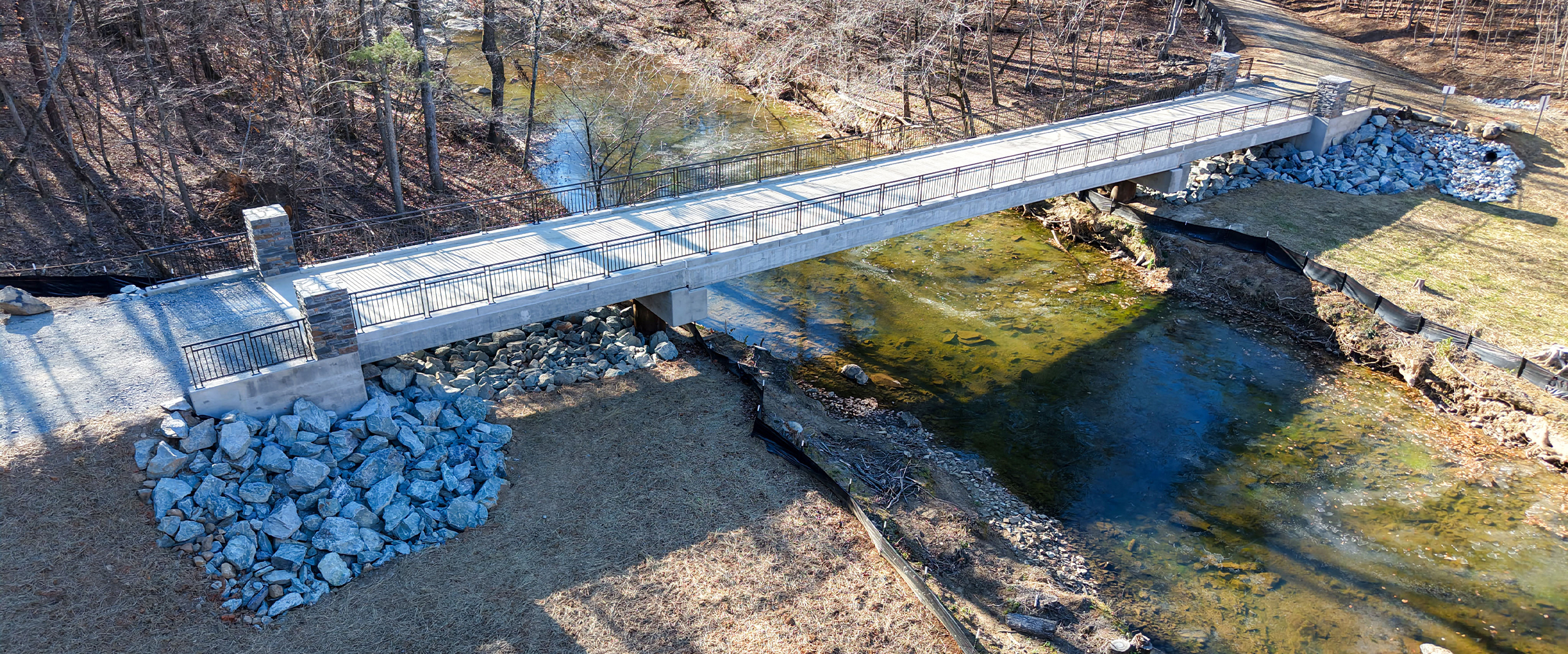
The Duke Forest is a teaching and research laboratory owned and managed by Duke University.
New Hope Creek sits at the heart of one of its largest divisions and serves as an essential outdoor classroom where students and researchers regularly engage in field-based learning, research, and long-term environmental monitoring. Over time, two aging in-stream structures began to disrupt the creek’s efficient health and function. A low-water concrete crossing originally constructed in the 1930s, as well as a defunct early 20th century stone dam, were altering flow conditions, restricting passage for native aquatic organisms, and contributing to streambank erosion. These impacts prompted a broader effort to restore the creek’s natural function, improve habitat connectivity, and stabilize the stream system.
The replacement of the existing low-water crossing took center focus. Originally designed with multiple small terracotta pipes to pass flowing water beneath the structure, the crossing had degraded over time, and frequent blockages were causing the structure to act as a dam. As a result, the overflow would occasionally limit access for forest management teams, emergency response, or recreational users. Additionally, the crossing severed habitat connectivity between the federally threatened Atlantic Pigtoe freshwater mussel and its host species, the Creek Chub. Recognizing the importance of the creek’s ecosystem, the Duke Forest initiated a feasibility study to evaluate removal of the barrier and identify a long-term solution to address environmental and accessibility concerns.
After being selected to lead the study, KCI’s environmental engineers began with a comprehensive site assessment of the two obstructions along the creek. Our team worked to evaluate existing conditions and develop alternative options for an overpass that would span the creek and its floodplain, avoiding in-stream elements to maintain a sustainable footprint. Using the information gained in the assessment, the team then developed the design for a new crossing, determining that a three-span, cored slab bridge was best suited to replace the original infrastructure. The new bridge was designed to provide safe, reliable access regardless of stream level and includes features such as handrails and custom detailing with Duke stone accents quarried from the Duke Forest, tying into the aesthetic character and legacy of the university’s iconic campus buildings. It has an expected lifespan of around 100 years and is engineered to withstand increasing climate pressures, including major flooding events. Following completion of the study, KCI advanced into full design and project delivery, providing structural, roadway, and hydraulic design, as well as survey, geotechnical coordination, construction phase support, and environmental permitting coordination.
Construction activities were carefully sequenced to maintain access while removing the existing structure. As the new bridge would include a 70-foot center span, long prefabricated elements would need to be transported along narrow, winding gravel roads with limited access. Our team worked to identify the most suitable pre-existing routes to minimize impacts on the surrounding forest and reduce the need for extensive roadway modifications or tree removal. Once the concrete slabs were installed to complete the span, the low-water crossing was dismantled, and its materials were transported to a local concrete recycling facility.
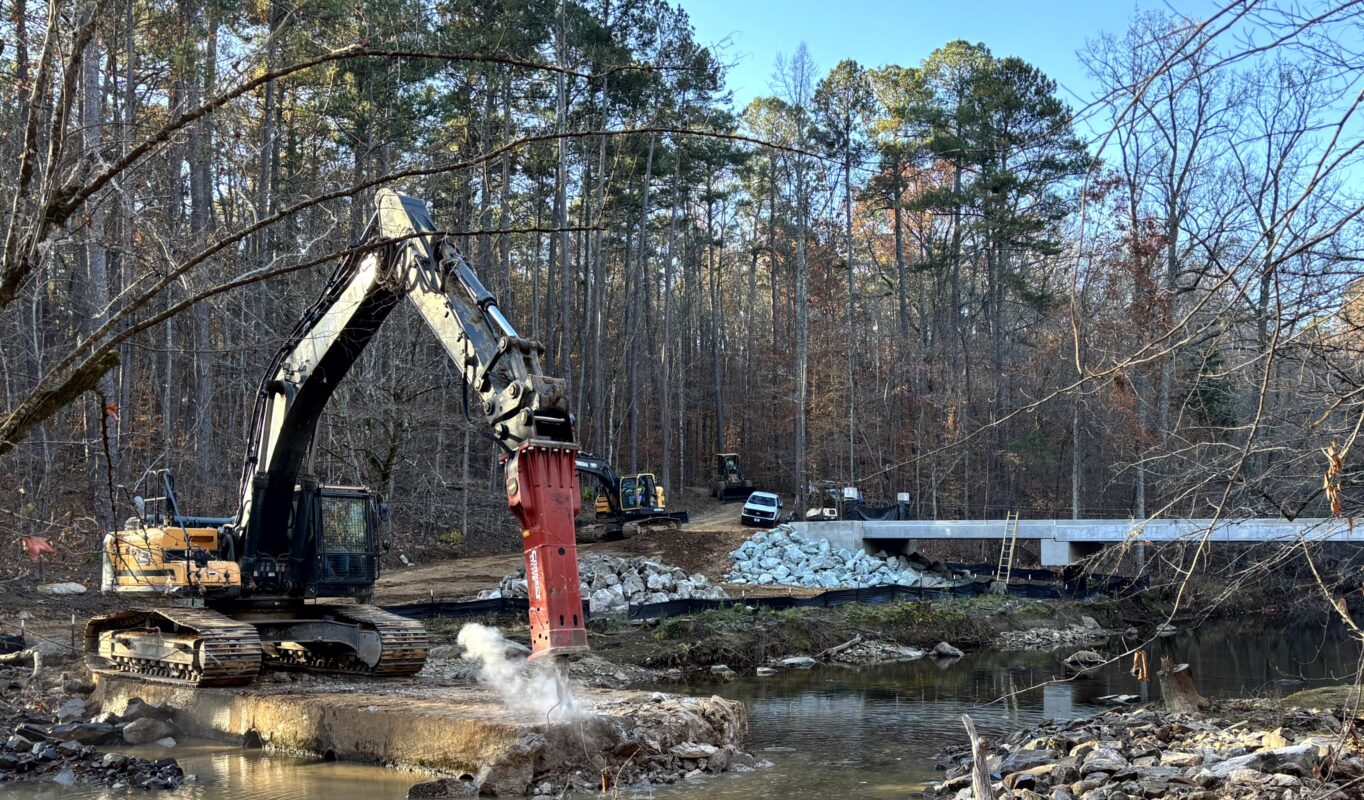 KCI personnel conducted oversight during the simultaneous removal of the preexisting low-water crossing and construction of a new, elevated bridge.
In addition to coordinating and overseeing removal of the low-water crossing, KCI was tasked with addressing the defunct downstream Billy Erwin Dam. Located approximately half a mile into the dense forest, the site had extremely limited access for necessary heavy equipment like excavators and hydraulic tools. To mitigate this, our team coordinated with Duke Forest staff to create an access route that balanced constructability with environmental protection, allowing a full-size excavator to reach the site without disturbing the surrounding forest. During the rapid two-day dam deconstruction, KCI provided on-site support to guide the contractor, ensure permit compliance, and maintain progress. Components of the dam, including the native stone building material, were reused to stabilize nearby eroding streambanks, further mitigating the impacts of the old dam to the stream.
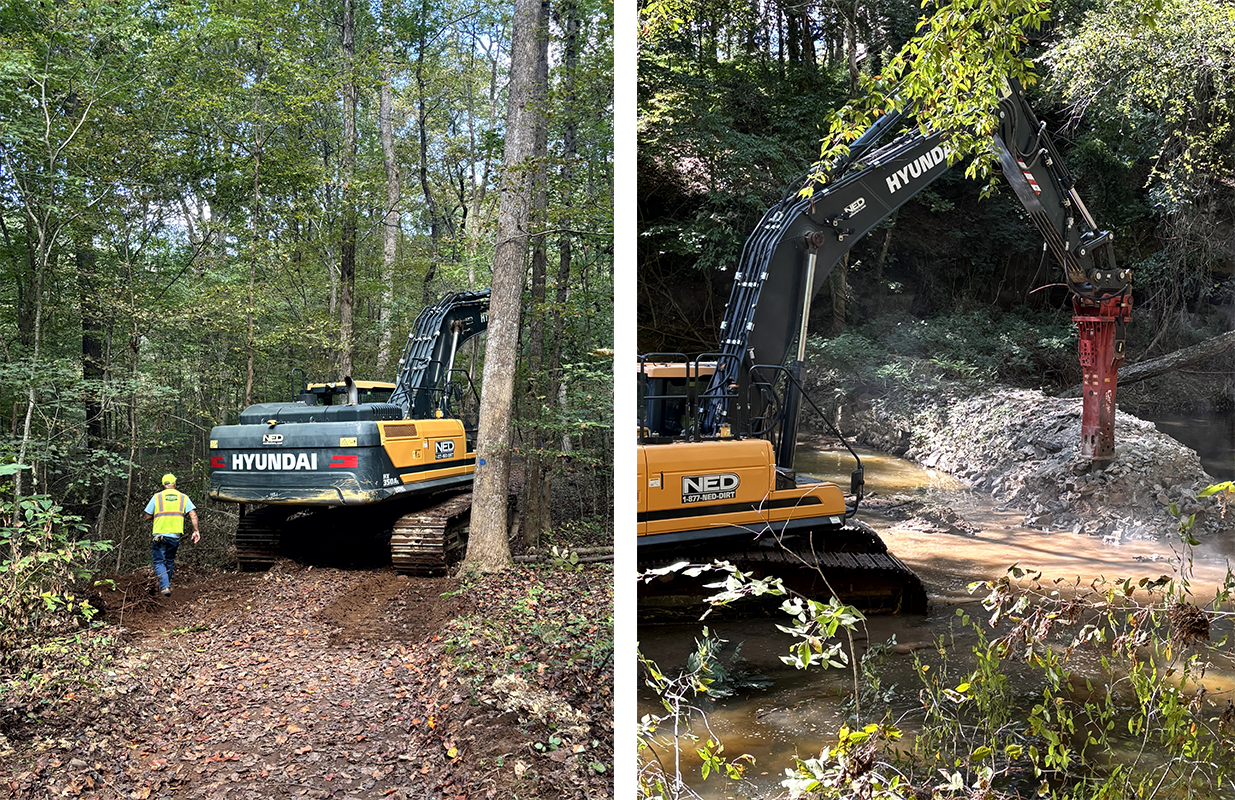 KCI, with oversight from Duke Forest, identified a feasible access route for large equipment to reach the remotely located Billy Erwin Dam, enabling deconstruction while ensuring minimal disruption to the surrounding environment.
Throughout all phases of the project, careful environmental consideration remained paramount. KCI coordinated closely with numerous state and federal agencies, including wildlife resource regulators and the Federal Emergency Management Agency (FEMA), to navigate a complex permitting process and ensure all work was completed in adherence to sustainable practices. Every detail, including construction timing, access methods, and in-stream work, were all planned to protect native species and preserve habitat conditions.
“From the start, we knew this project was about more than replacing infrastructure: it was an opportunity to restore the creek’s natural function and support the ecosystem around it. Through strong coordination and intentional design, we were able to deliver rehabilitation that improves both the natural environment and surrounding community.”
– Adam Spiller, CPESC, Service Line Leader
Despite the complexities associated with site access, the project advanced on an accelerated schedule. KCI completed design and permitting in less than a year and supported the client through bidding and construction within an additional eight months. Funding for the project was secured through a combination of grants and private contributions, leaving limited flexibility for budget deviations. Nevertheless, the team successfully accomplished all deliverables with available funding, ensuring the steady progression of the initiative. Construction was completed with the new bridge fully installed and both pre-existing in-stream structures safely and successfully removed.
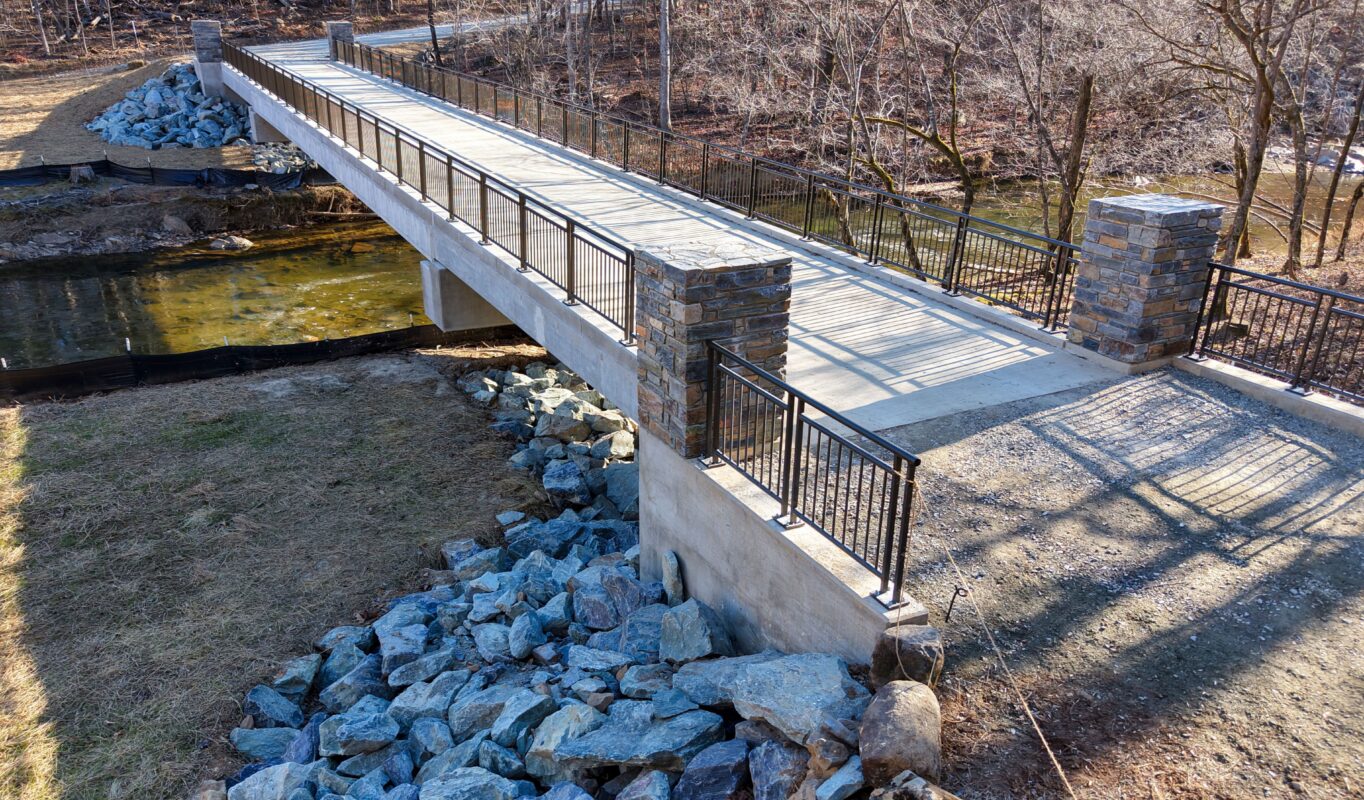 A new bridge spans New Hope Creek, improving connectivity, alleviating water flow concerns, and enhancing aesthetic appeal for Duke Forest.
The long-term impact of the project extends beyond the immediate site. With the previous low-water concrete crossing and dam removed, New Hope Creek is now able to flow freely through the Duke Forest for the first time in a century, improving aquatic species movement and water quality, as well as providing consistent access for forest operations and public use. The restored system strengthens the Duke Forest’s role as a living laboratory, creating expanded opportunities to study stream dynamics, habitat connectivity, and ecosystem response under natural conditions, helping ensure the creek can continue to function as intended for years to come.