Explore All Facilities Services
KCI utilizes Building Information Modeling (BIM) software as part of our continued commitment to design excellence.
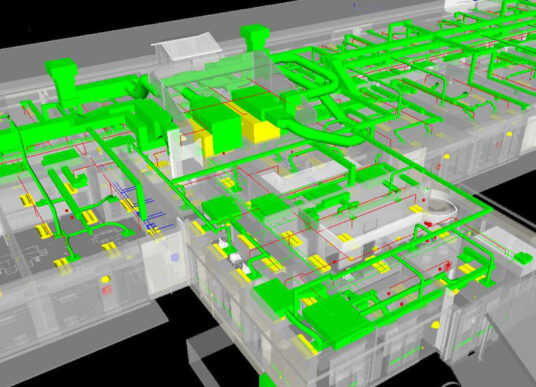
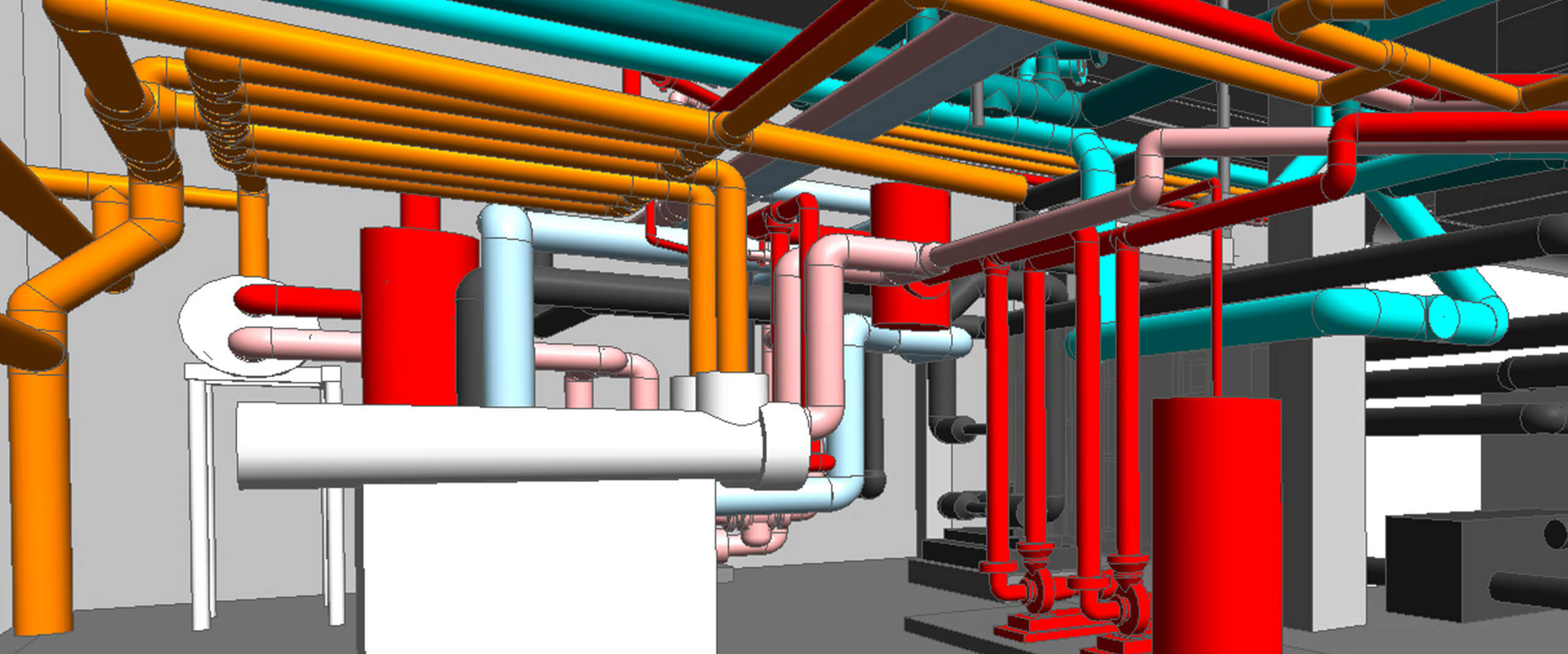
This software replaces traditional two-dimensional drawings with a complete three-dimensional, data-driven model of a structure. Using this technology, we are able to streamline and improve the design and construction process for our clients, project owners, and end users. BIM models can be used to provide 3D representations for a clearer approval process. With this data-driven deliverable, errors and risks are reduced using dynamic system elements to drive decisions such as automating equipment scheduling and labeling.
Services Offered
3D Revit Modeling of As-Built Conditions
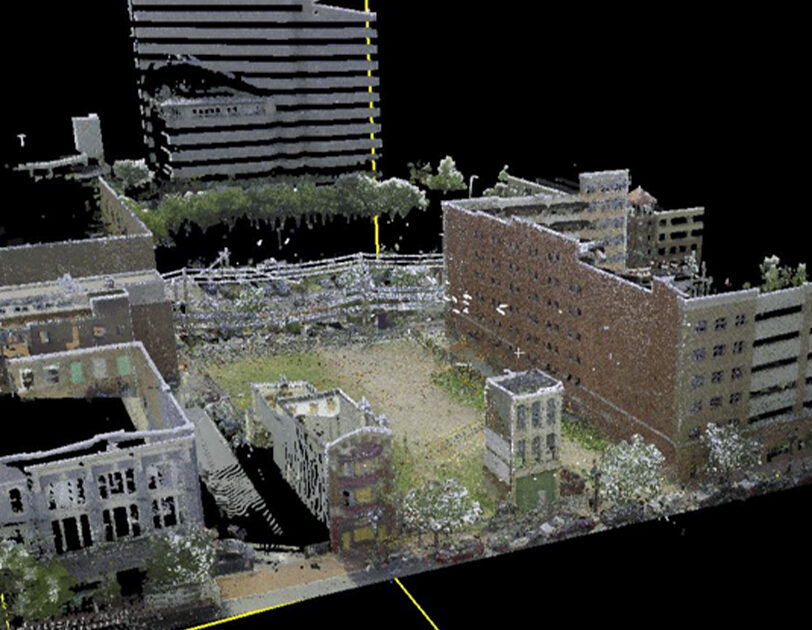
Scan to BIM Conversion of Laser Scans and Point Clouds into Accurate Models
Schematic Documentation and Area Calculations for Planning and Programming
Solar-Shade Analysis
Centralized Document Management in a Shared Digital Workspace
PDF/CAD Conversion into Revit Models
Pre-Construction Clash Detection and Construction Progress Documentation
Renderings and VR Visualization
Our in-house team of trained and certified structural, mechanical, electrical, and fire protection engineers employs an approach to creating designs that foster communication throughout the process. Using BIM’s conflict identification capabilities, KCI can deliver an exceptionally high-quality deliverable that results in reduced change orders and schedule delays during construction. Design conflicts are identified and remedied long before the project reaches final submittal, resulting in significant cost savings and expedited construction. Using this tool to coordinate between technical staff and clients leads to successful, responsive and efficient project completion.
Engineering and land surveying services provided in North Carolina are performed by our associated entity, KCI Associates of North Carolina, P.A.
We can perform detailed analyses including circuitry checks, light levels, thermal comfort, LEED points, projected cost of energy and carbon footprint for high-performance buildings.