


By Steven Marler
Project Scientist
Natural Resources
As human development continues expanding into natural habitats, interactions between wildlife and infrastructure are becoming more frequent.
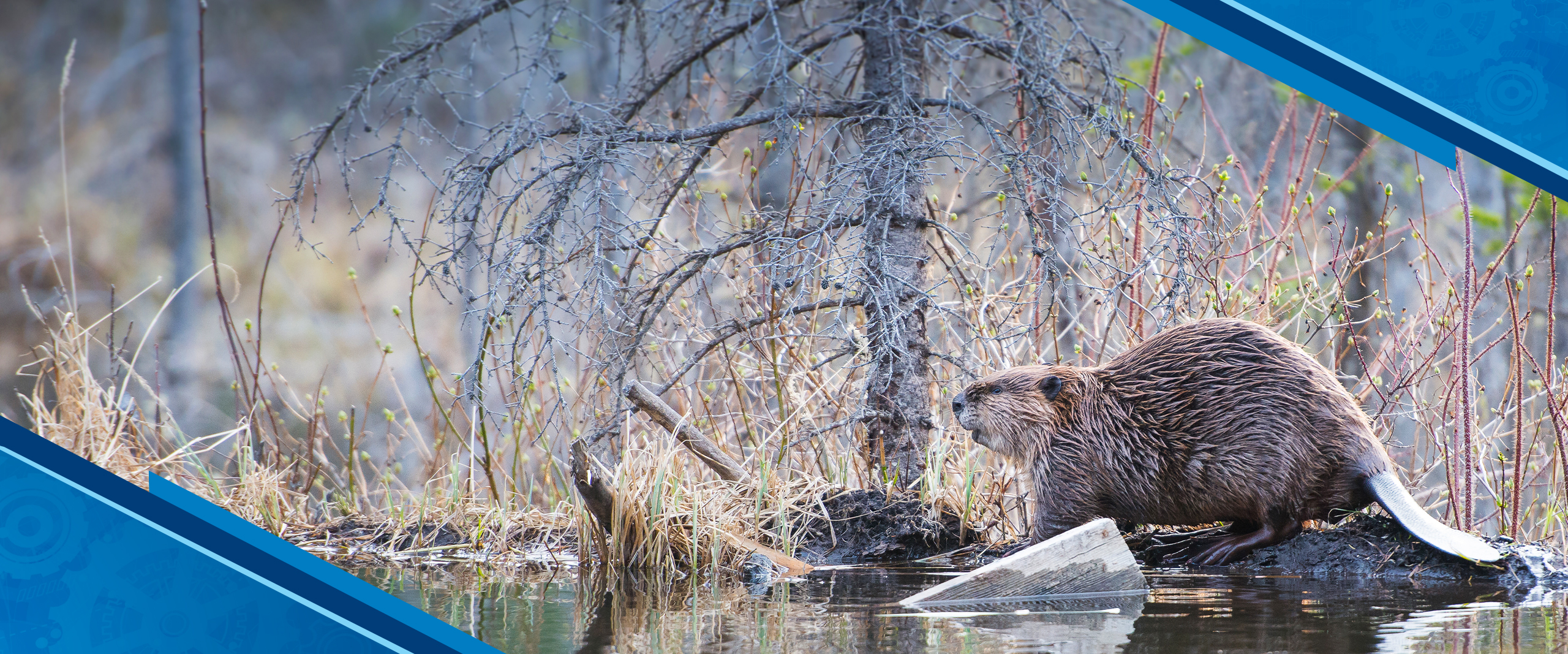
Beavers have long shaped freshwater environments, but today they are increasingly shaping conversations around infrastructure and land development, making the need for practical, sustainable solutions more apparent. Their natural behaviors can conflict with drainage systems, roadways, and other critical infrastructure. Rather than relying on short-term or ineffective solutions, KCI is focused on developing sustainable approaches that allow beavers and development to coexist.
Understanding Behaviors & Movement Patterns
Beavers are highly adaptive and play an important role in freshwater ecosystems. Found throughout much of North America, they thrive in slow-moving streams, wetlands, and wooded waterways, where they construct dams and lodges for protection and shelter. Historically, beaver populations declined significantly due to the fur trade, but began to recover in the early 1900s following conservation efforts. Today, their populations have rebounded to near historic levels. At the same time, urban, suburban, and agricultural development has expanded into areas they once occupied.
This overlap has led beavers to adapt by building dams in manmade systems such as culverts, stormwater facilities, and drainage channels. While this behavior is natural, it can create flooding risks and operational challenges for municipalities and infrastructure owners. Traditional approaches like relocation have proven ineffective and often introduce additional environmental and regulatory concerns. As a result, there is a growing need for solutions that address both ecological and infrastructure needs.
Advancing a New Area of Service
After recognizing a gap in practical, field-based solutions, KCI’s natural resources team began exploring beaver coexistence as a formal service offering and took a deeper interest in how these challenges could be addressed more effectively. That interest led to training through the Beaver Institute’s BeaverCorps program, which focuses on wetland management and coexistence strategies. The program provided hands-on experience in designing and installing mitigation devices that manage water levels while allowing beavers to remain in place.
While active in the program, I helped lead KCI’s first beaver coexistence device installation in Plainfield, Indiana, gaining hands-on experience that supported the development of this emerging offering. From site assessment and project development to installation and ongoing maintenance, the work is largely led in the field, helping establish a practical foundation for expanding these services to other communities facing similar challenges.
Practical Installation Strategies
KCI’s approach centers on controlling water levels rather than removing beavers or dismantling their dams. This is typically achieved through the installation of flow devices that allow water to pass through or around a dam at a controlled rate.
These systems are designed to maintain water levels that are acceptable for both beavers and surrounding infrastructure. When properly installed, they reduce the likelihood of repeated damming in problematic locations while preserving the ecological benefits that beavers provide.
Different site conditions require different solutions. For example:
- Culvert protection systems can prevent blockages while maintaining flow
- Pond levelers help regulate water levels in retention areas
- More complex systems can be used for larger or more variable water bodies
Each solution is tailored to the site’s conditions, water depth, and observed beaver activity, ensuring both effectiveness and long-term performance.
Expanding Opportunities and Impact
Beaver coexistence remains a relatively niche service, but demand is growing. Municipalities, transportation agencies, and environmental programs are increasingly seeking alternatives to traditional wildlife management approaches. As development continues to intersect with natural systems, solutions like these will become increasingly important. By combining ecological insight with practical engineering, KCI is helping clients manage risk, protect infrastructure, and support environmental stewardship. To learn more, contact us.