Since 2013, KCI has supported the Delaware Department of Transportation by performing underwater and low-clearance inspections for more than 750 bridges and culverts statewide.
KCI plans, coordinates, and executes comprehensive underwater inspections that include 100% Level I visual assessments and 10% Level II inspections of submerged bridge substructures. Inspections are performed by commercially certified engineer diver teams and led by Delaware-registered PE divers in accordance with DelDOT’s Bridge Inspection Manual and applicable safety standards.
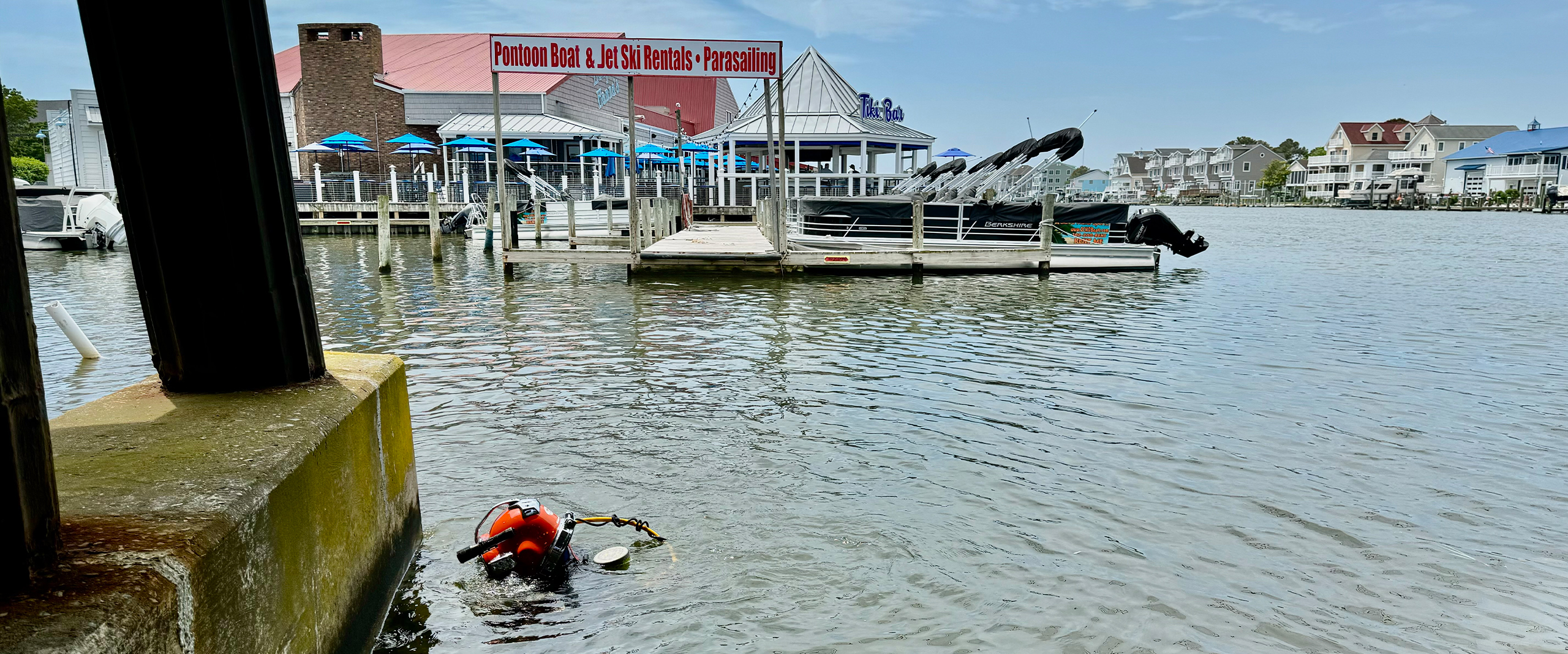
Many of the inspected structures are located along Delaware’s coastline, where teams operate in challenging conditions characterized by strong tidal currents, heavy debris, zero visibility, and water depths of up to 35 feet. Access often requires 24-foot dive boats or 14-foot jon boats, along with coordination with DelDOT and the U.S. Coast Guard.
The inspections encompass a wide range of bridge and culvert types, including concrete, steel, and timber bridges with features such as multi-beam, slab, and reinforced concrete arches, as well as culverts constructed of corrugated HDPE, corrugated steel pipe, reinforced concrete pipe, and precast concrete box sections. Several culverts include downstream tide gates, and timber increment core samples are obtained at select locations to assess internal deterioration.
For submerged or low-clearance structures, KCI also performs full routine inspections of topside elements and enters inspection data into DelDOT’s BrM bridge management database. Underwater inspections are documented in standalone comprehensive reports that include National Bridge Inventory (NBI) condition ratings, element ratings, CADD sketches of defects and soundings, photographic documentation, and recommended repair actions.
Through this inspection work, KCI provides DelDOT with reliable structural condition data that supports maintenance planning, rehabilitation prioritization, and long-term asset management of critical transportation infrastructure across the state.